

In recent years, there has been a growing global concern about the environmental impact of consumer products, and shopping bags are no exception. As a supplier of hessian shopping bags, I've witnessed firsthand the increasing demand for these eco - friendly alternatives to traditional plastic bags. But the question that often arises is: Do hessian shopping bags have a long - term environmental impact?
The Basics of Hessian Shopping Bags
Hessian, also known as jute, is a natural fiber derived from the jute plant. It is one of the most affordable natural fibers and is second only to cotton in terms of production volume. Hessian shopping bags are made from this jute fiber, and they have several inherent qualities that make them a seemingly sustainable choice.
One of the primary advantages of hessian bags is their biodegradability. Unlike plastic bags, which can take hundreds of years to decompose, hessian bags break down naturally in the environment. When disposed of in a composting environment, they can turn into organic matter within a few months. This characteristic means that hessian bags do not contribute to the long - term accumulation of waste in landfills or oceans, which is a significant problem associated with plastic bags.
Another positive aspect is the renewable nature of jute. Jute plants are fast - growing, typically reaching maturity in just 4 - 6 months. This rapid growth rate allows for a continuous supply of raw materials without depleting natural resources. Moreover, jute cultivation requires relatively less water compared to other fiber crops like cotton. It can also be grown in marginal lands where other crops may not thrive, reducing the pressure on prime agricultural land.
Manufacturing Process and Environmental Impact
The manufacturing process of hessian shopping bags also has some environmental implications. However, compared to plastic bag production, it is generally more eco - friendly.
The production of plastic bags involves the extraction and refining of fossil fuels, which is a major contributor to greenhouse gas emissions. In contrast, the processing of jute into hessian bags is a relatively low - energy process. Most of the energy used in jute processing comes from renewable sources in many jute - producing regions. Additionally, jute plants absorb carbon dioxide during their growth, which helps to offset some of the emissions associated with the manufacturing process.
However, there are still some challenges in the manufacturing of hessian bags. For example, the use of chemicals in the bleaching and dyeing processes can have negative environmental impacts if not properly managed. To address this issue, many modern hessian bag manufacturers are adopting more sustainable production methods. They are using natural dyes and eco - friendly bleaching agents to reduce the chemical footprint.
Long - Term Use and Reusability
One of the key factors in determining the long - term environmental impact of hessian shopping bags is their reusability. A single hessian bag can be used multiple times, often for years, if properly cared for. This reusability significantly reduces the need for single - use bags, whether they are plastic or paper.
Consumers are increasingly recognizing the value of reusable bags. Many supermarkets and retailers now encourage customers to bring their own bags by offering incentives such as discounts. Hessian bags are popular choices for this purpose due to their durability and strength. They can carry heavy loads without tearing, making them suitable for grocery shopping and other daily errands.
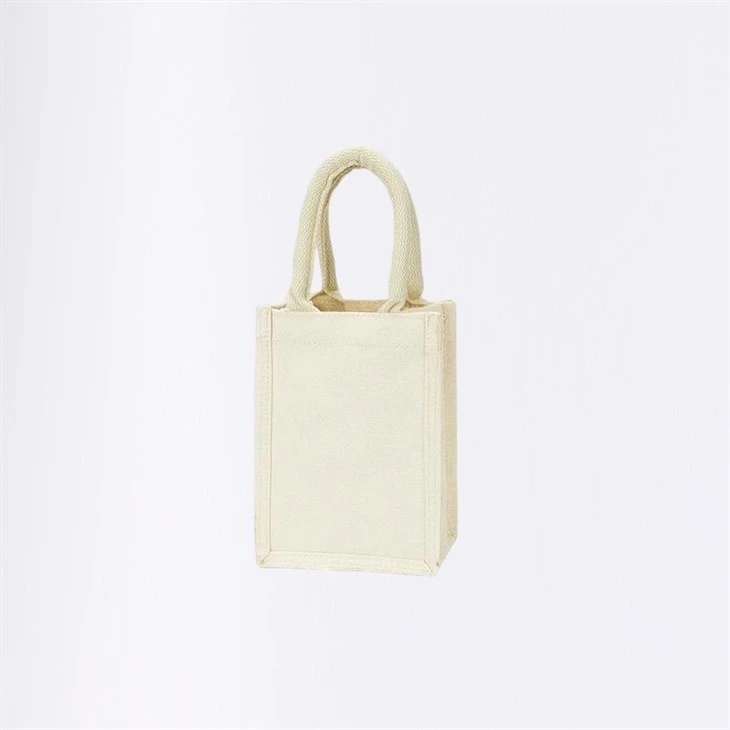

However, to maximize the environmental benefits, consumers need to use hessian bags frequently. If a hessian bag is only used once or twice and then discarded, its environmental advantage over single - use plastic bags is diminished. As a supplier, I often educate my customers about the importance of reusing their hessian bags and provide tips on how to care for them to extend their lifespan.
End - of - Life Options
When a hessian bag reaches the end of its useful life, there are several environmentally friendly disposal options. As mentioned earlier, composting is an ideal choice. Composting not only reduces waste but also enriches the soil with organic matter. Home composting is a simple and effective way for consumers to dispose of their old hessian bags.
Another option is recycling. Although the recycling of hessian bags is not as widespread as that of some other materials, there are facilities that can process jute fibers into new products. For example, recycled jute can be used to make insulation materials, carpets, or even new shopping bags.
Market Demand and the Role of Suppliers
As a hessian shopping bag supplier, I have seen a significant increase in market demand over the past few years. More and more businesses are looking for sustainable packaging solutions, and hessian bags fit the bill perfectly. Retailers, restaurants, and even event organizers are opting for hessian bags to enhance their brand image and meet the growing consumer demand for eco - friendly products.
We offer a wide range of hessian shopping bags, including White Jute Bag, Large Hessian Bags, and Black Jute Tote Bag. Our bags are designed to be both functional and stylish, appealing to a diverse customer base.
We also play an important role in promoting the sustainable use of hessian bags. We work closely with our customers to provide information about the environmental benefits of hessian bags and offer after - sales support to ensure that they get the most out of their purchases.
Conclusion
In conclusion, hessian shopping bags have a generally positive long - term environmental impact. Their biodegradability, renewable nature, and reusability make them a sustainable alternative to traditional plastic bags. While there are some challenges in the manufacturing process, the industry is moving towards more sustainable practices.
As a supplier, I am committed to providing high - quality hessian shopping bags that not only meet the needs of our customers but also contribute to a greener planet. If you are interested in purchasing hessian shopping bags for your business or personal use, I encourage you to contact us for more information and to start a procurement discussion. We look forward to working with you to make a positive environmental impact.
References
- "Jute: The Golden Fiber", FAO (Food and Agriculture Organization of the United Nations)
- "Environmental Impact of Different Types of Shopping Bags", Journal of Environmental Science and Management
- "The Sustainability of Natural Fiber - Based Products", International Journal of Sustainable Development and World Ecology