

Is natural jute ribbon available in different weaves?
As a supplier of natural jute ribbon, I often encounter inquiries from customers about the variety of weaves available for this eco - friendly product. Natural jute ribbon is not only popular for its rustic charm but also for its versatility in various applications, from crafting to packaging. In this blog, I will explore the different weaves of natural jute ribbon and how they can meet diverse customer needs.
Understanding Jute and Its Weaving Potential
Jute is a long, soft, shiny vegetable fiber that can be spun into coarse, strong threads. It is one of the most affordable natural fibers and is second only to cotton in terms of production and global consumption. The unique properties of jute, such as its strength, biodegradability, and natural texture, make it an ideal material for weaving into ribbons.
The process of weaving jute into ribbons involves interlacing the jute threads at right angles to create a fabric - like structure. Different weaving techniques can be employed to produce ribbons with distinct characteristics, including appearance, strength, and flexibility.
Common Weaves of Natural Jute Ribbon
Plain Weave
The plain weave is the simplest and most common type of weave used for natural jute ribbon. In a plain weave, the weft (horizontal) threads pass over and under each warp (vertical) thread in an alternating pattern. This creates a flat, even surface with a balanced structure.
The plain - woven jute ribbon has a classic, clean look that is suitable for a wide range of applications. It is often used in packaging, where its simplicity can enhance the natural aesthetic of the product. For example, it can be used to tie around gift boxes or as a handle for paper bags. The plain weave also provides good strength in both the warp and weft directions, making it durable for everyday use.
Twill Weave
Twill weave is another popular option for natural jute ribbon. In a twill weave, the weft threads pass over one or more warp threads in a diagonal pattern, creating a series of parallel diagonal lines on the surface of the ribbon.
This type of weave gives the jute ribbon a more textured and sophisticated appearance compared to the plain weave. The diagonal lines add visual interest and can make the ribbon stand out in a project. Twill - woven jute ribbons are often used in more decorative applications, such as home decor. They can be used to create bows for curtains or as trim for upholstery. The twill weave also tends to be more flexible than the plain weave, allowing it to drape better.
Herringbone Weave
The herringbone weave is a variation of the twill weave. It features a zig - zag pattern that resembles the bones of a herring fish. In a herringbone weave, the diagonal lines of the twill reverse direction at regular intervals, creating a distinctive and eye - catching design.
Herringbone - woven natural jute ribbons are highly decorative and are often used in high - end crafting projects or as a statement piece in packaging. They can add a touch of elegance to a gift or be used to create unique wall hangings. The herringbone weave requires more complex weaving techniques, which can result in a slightly higher cost, but the end product is well worth it for its aesthetic appeal.
Factors Influencing the Choice of Weave
When customers are choosing a natural jute ribbon, several factors come into play regarding the choice of weave.
Functionality
The intended use of the ribbon is a crucial factor. For functional applications like securing packages or as a handle, a plain - woven jute ribbon may be the best choice due to its strength and simplicity. On the other hand, if the ribbon is for decorative purposes, such as creating bows for a special occasion or adding a decorative element to a piece of clothing, a twill or herringbone weave might be more suitable.
Aesthetic Preferences
Customers' aesthetic preferences also play a significant role. Some people prefer the classic, understated look of a plain - woven ribbon, while others are drawn to the more textured and elaborate patterns of twill or herringbone weaves. The color and finish of the jute ribbon can also interact with the weave to create different visual effects.
Cost
Cost is always a consideration. Plain - woven jute ribbons are generally more affordable because they are easier and quicker to produce. Twill and herringbone weaves, which require more complex weaving processes, may be more expensive. However, the added cost can be justified by the enhanced appearance and quality for certain applications.
Our Product Range
As a supplier of natural jute ribbon, we offer a wide range of ribbons in different weaves to meet the diverse needs of our customers. Whether you are looking for a simple plain - woven ribbon for your packaging business or a decorative herringbone - woven ribbon for your craft project, we have you covered.

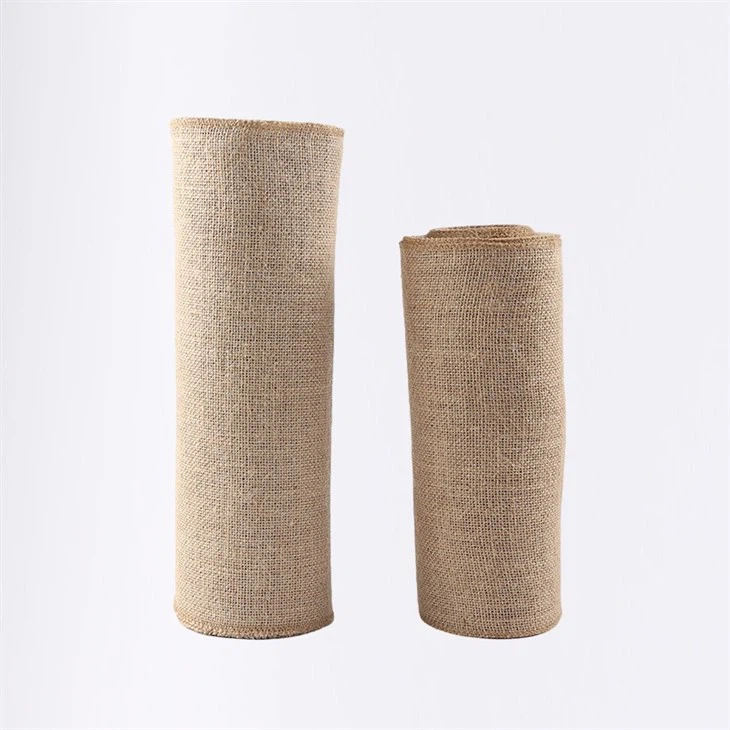
In addition to our standard weaves, we also provide customization options. If you have a specific design or pattern in mind, our experienced weavers can work with you to create a unique natural jute ribbon that meets your exact requirements.
We also offer a variety of related products. For example, you can check out our Colored Burlap Rolls, which are perfect for adding a splash of color to your projects. Our Burlap Ribbon for Christmas Tree is a popular choice during the holiday season, adding a rustic touch to your Christmas decorations. And if you need a wider ribbon, our 5 Inch Wide Burlap Ribbon is a great option for larger - scale projects.
Contact Us for Your Jute Ribbon Needs
If you are interested in purchasing natural jute ribbon or have any questions about our products, we encourage you to get in touch with us. Our team of experts is always ready to assist you in finding the right weave and product for your specific needs. We can provide samples, offer advice on usage, and help you with any customization requests.
Whether you are a small - scale crafter or a large - scale business, we are committed to providing high - quality natural jute ribbon at competitive prices. Don't hesitate to reach out to us and start exploring the possibilities of using natural jute ribbon in your next project.
References
- "The Jute Industry: History, Production, and Applications" by Jute Research Institute
- "Textile Weaving Techniques" by Textile Institute Press